
Exhibition at Skulpturengarten Gerolstein
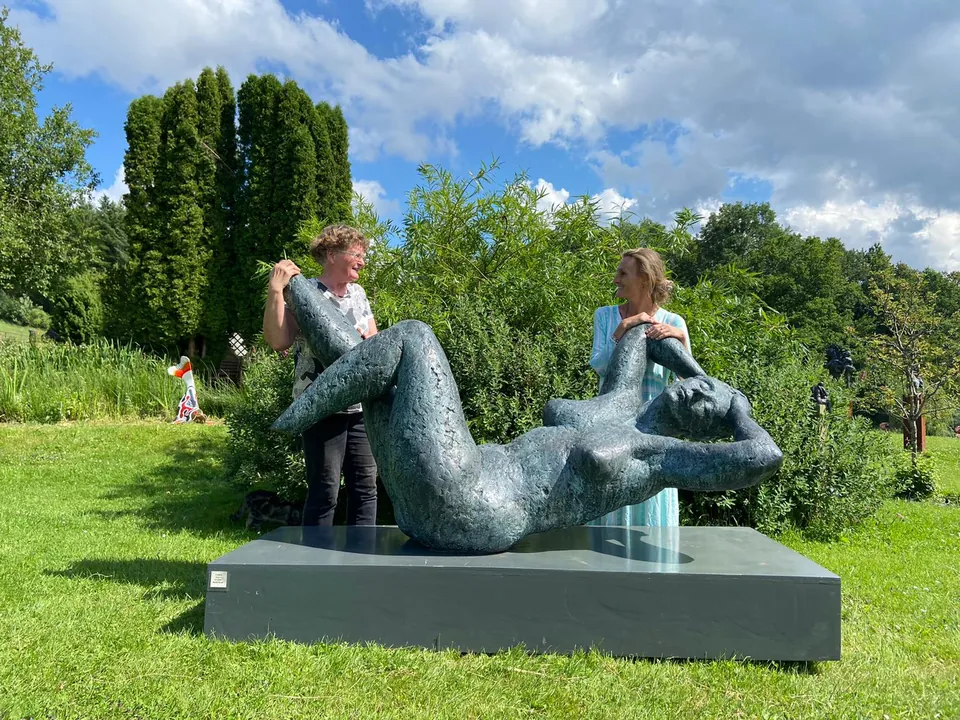
Skulpturengarten Gerolstein in Germany is showing twelve large and fifteen smaller sculptures by Maïté Duval until 1 October. The large bronzes, the intimate double portraits and the studies are on show for the first time since Maïté died on 2 November.
Maïté Duval (Renazé, 1944, Zutphen, 2019) became known for a body of work entirely her own, of robust form, movement and femininity. Her figurative sculptures can be found in public collections, are loved by collectors and are held in many museums. Ainsi soit-elle (1992), which is now on show in Gerolstein, is characteristic of her art: clear and warm forms, volumes full of calm and serenity, and at the same time a bronze skin within which an intense tension unfolds. This is a world of earthly femininity, full of beauty in the everyday, and that is what makes it special.
The Dutch title of that sculpture, Zoals zij is, which means "as she is", is also the title of the posthumous tribute to Maïté Duval in Gerolstein. The Skulpturengarten shows twelve large and fifteen smaller sculptures by this charming but immensely strong French Dutch artist. As she was: forever searching between self assured women full of appetite for life on the one hand, and restrained, almost fragile nudes and double portraits on the other.
De Sprong (1987) is a strong example of Maïté's vital work. The roughly modelled chest, the male belly and the muscular thighs form an explosion of dance and movement. The large format and the energy sometimes seem to lift her sculptures beyond life itself. Volupté (1999, pictured) is a true ode to vital femininity: an enormous, ecstatic goddess.
Arcade (2001), the first sculpture Maïté made after the death of her husband in 1999, marks the other side of her work. It bends, it reaches, it longs. The title refers not only to the arched pose of the body; it is as if Maïté herself were trying to build a bridge to her late partner. A painful and daring work. The sculptures and double portraits that followed are melancholic and speak of motherhood, love and intimacy. Malade d'amour (2002), Verdriet (2007) and Aime-moi (2008) are moving testimonies of an all consuming love.
In her last years Maïté returned to the lively femininity of her earlier work, but more restrained, riper. She experimented with abstraction and with the patina of the bronze. Feu de Lune, in fact only a lower body, brings with it a wealth of associations through its playful title and its pure, almost abstract form: a primal mother, an ordinary woman, a mischievous lover, an artist who never stopped renewing herself.
Skulpturengarten Gerolstein
28 June to 1 October 2020
Niedereich 7a, 54568 Gerolstein
Wednesday, Thursday, Friday, Saturday and Sunday from 11am to 5pm
www.skulpturengartengerolstein.com